While the world watched Bitcoin headlines, the most powerful financial institutions on earth quietly began rewiring the global financial system.
There is a financial revolution happening right now, and it is not being televised.
It is happening in the boardrooms of BlackRock, JPMorgan, Goldman Sachs and HSBC and by the time most people hear about it, the early wealth will already have been made.
The tokenisation of real world assets placing ownership of physical and financial assets onto a blockchain as a digital token has become one of the fastest-growing sectors in modern finance. A government bond, a commercial property, a bar of gold: all of it can now be split into fractions and traded around the clock from a smartphone, without a broker, without a bank, and without the gatekeepers who have historically decided who gets access to serious wealth-building tools.
The numbers speak for themselves. The tokenised asset market has surged 589% from early 2025 to June 2026. Citi's latest report projects that figure reaching $5.5 trillion by 2030. BlackRock's BUIDL fund has paid out over $100 million in real Treasury yield directly into investors' crypto wallets. JPMorgan, HSBC, Goldman Sachs and BNY Mellon are all building competing products.
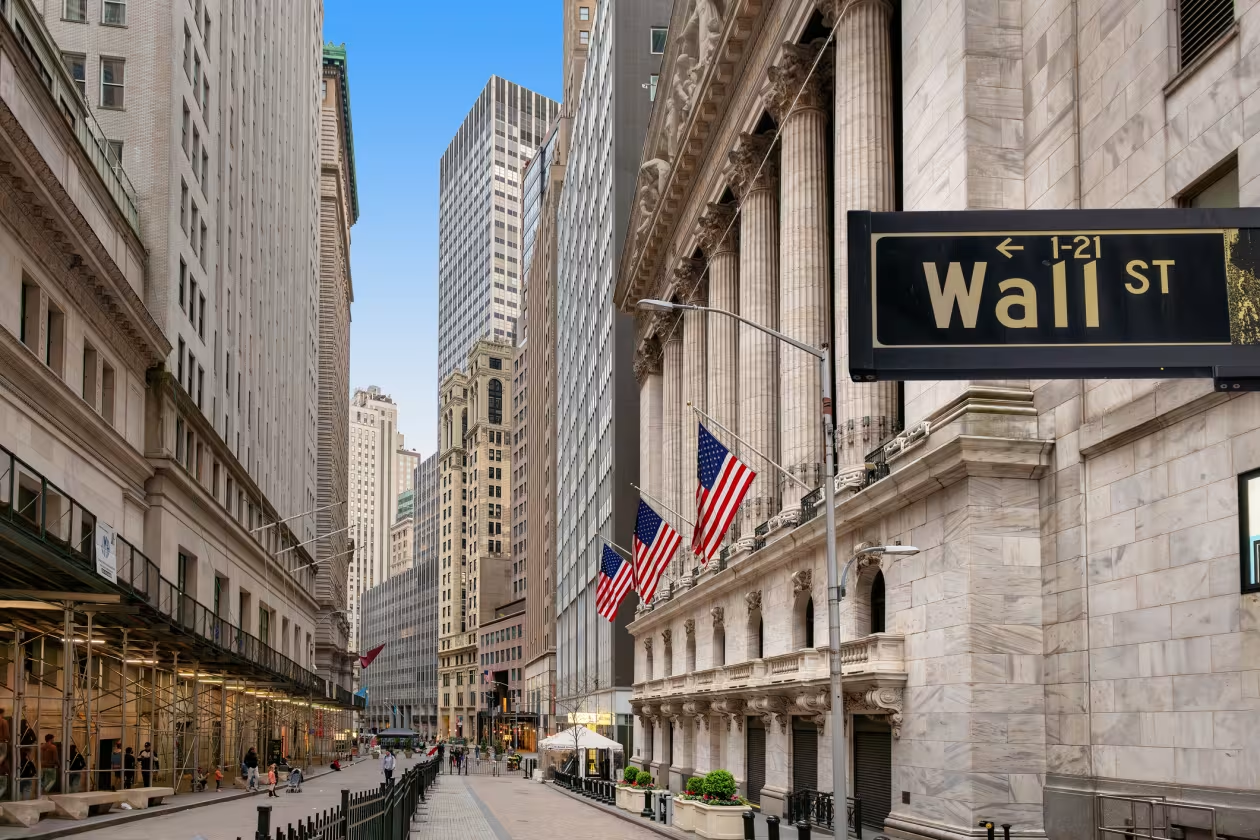
The New York Stock Exchange and Nasdaq received SEC approval in early 2026 to enable tokenised, 24-hour trading of US equities.
"We're not spending enough time talking about how quickly we're going to tokenise every financial asset."— LARRY FINK, CEO, BLACKROCK
For communities historically excluded from wealth-building, the implications are significant. Commercial real estate, private credit, government bonds tools that have long sat behind minimum investments of hundreds of thousands of dollars are now accessible in fractions from as little as £50. No financial adviser. No credit check. No postcode discrimination.
Tokenised private credit products are returning 8 to 12 percent annually. Tokenised Treasuries offer government-backed yield of 3.5 to 5 percent, settled in seconds.
The risks are real regulation remains incomplete, smart contract vulnerabilities exist, and tax treatment in the UK and US is still unresolved. But the direction is clear.
The IMF described tokenisation in April 2026 not as a marginal efficiency gain but as a structural reconfiguration of global finance. History rewards those who move early. The question is whether this generation will be at the table or watching from outside again.

From breaking news to thought-provoking opinion pieces, our newsletter keeps you informed & engaged.