Since 1969, hedge fund managers have collected roughly $1.8 trillion in fees almost half the industry's total gains. An NBER study put it more starkly: managers took 64 cents of every dollar earned. Investors kept 36.
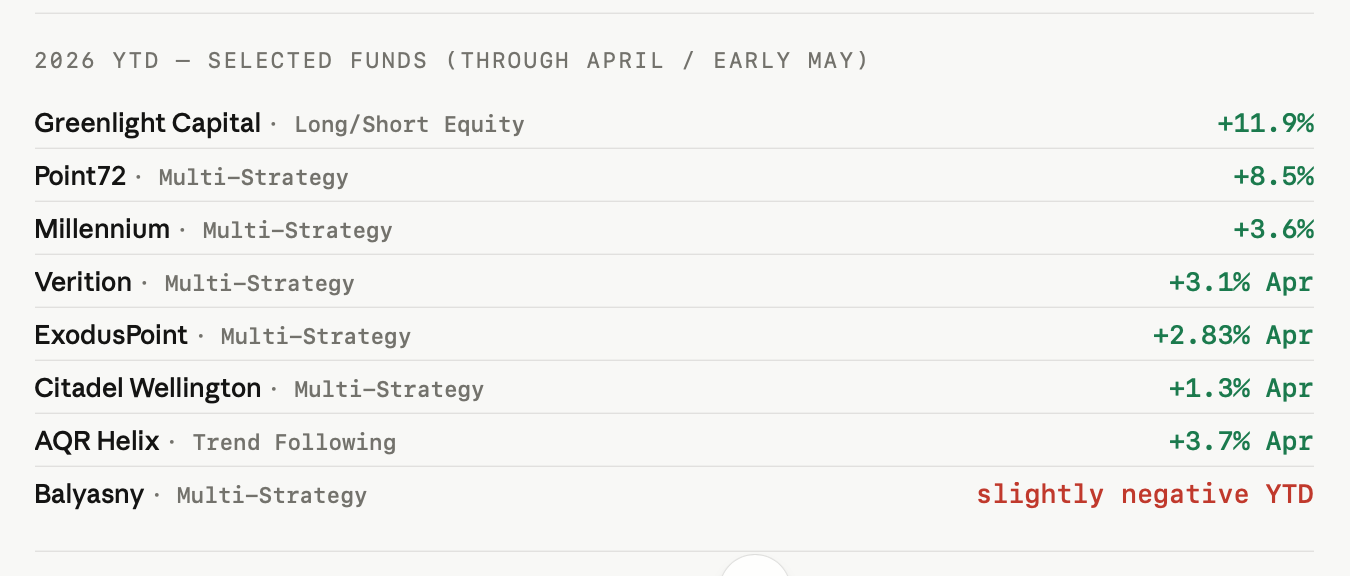
The traditional "2 and 20" model was at least legible. Two percent on assets, twenty on profits, everything else absorbed by the manager. The model now favoured by Millennium, Point72 and Balyasny works differently. Management fees vanish from the headline, replaced by open-ended pass-through expenses trader pay, technology, reportedly mobile phone bills.
The 20% performance cut stays. Add a 6%-plus expense ratio on top and the same gross return delivers nearly $400 million less to investors on a $10 billion fund.
Balyasny's 2023 results made this concrete. Gross return: 15.2%. Net to investors: 2.8%. Over $768 million in costs transferred to clients. Point72's offering documents described pass-through charges as potentially unlimited, expected to be "substantial regardless of performance."
2025 was the industry's best year since the financial crisis 12.6% aggregate return, with healthcare funds up 33.8% and macro strategies up 17%. The fee drag didn't shrink. It accelerated.
As for where the money is betting: AI infrastructure dominates, with Amazon held by 994 funds and Citadel growing its Nvidia position 120% in a single quarter. The less obvious trade is power data centres are forecast to consume up to 12% of US electricity by 2028, and the major quant funds have been quietly building positions in utilities, nuclear operators and grid infrastructure alongside the obvious chip names. Financials and global macro round out the top allocations, with healthcare the surprise performer of the year.
The fee argument funds make in their own defence is that exceptional gross returns justify exceptional costs.
The data since 1969 suggests that's true for a handful of managers, some of the time and the machine runs for everyone else regardless.

From breaking news to thought-provoking opinion pieces, our newsletter keeps you informed & engaged.