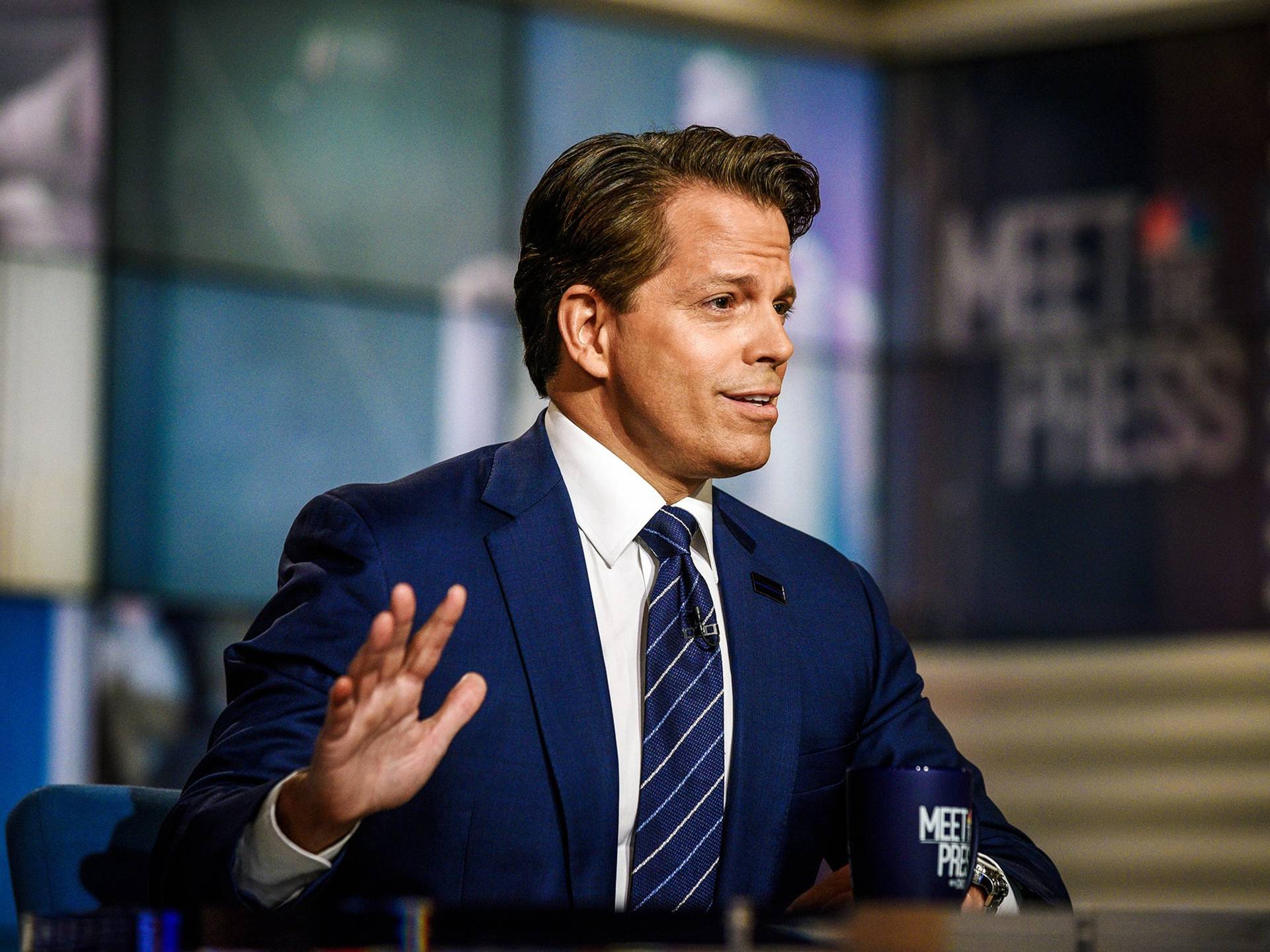
Anthony Scaramucci and Mike Novogratz warn that the SpaceX, OpenAI, and Anthropic IPO wave is less a rising tide than a liquidity drain and the jobs conversation nobody wants to have has already started.
Wall Street is in a celebratory mood. Goldman Sachs has raised its S&P 500 year-end target to 8,000.
The artificial intelligence narrative is parabolic. SpaceX is days from its Nasdaq debut. And yet two of the most connected voices in alternative finance are telling anyone who will listen that the party has a very specific expiration date.
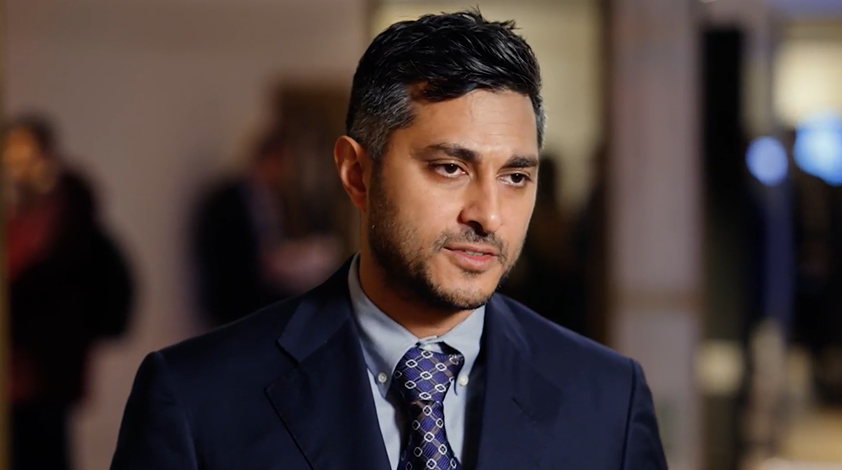
Anthony Scaramucci, founder of SkyBridge Capital and former White House communications director, and Michael Novogratz, founder and chief executive of Galaxy Digital, delivered a joint warning this week that the sheer scale of imminent technology listings could drain liquidity from the broader market at precisely the moment retail and institutional investors are most exposed. The irony is not lost on either man: the companies most responsible for the bull market's momentum may also be the mechanism by which it ends.
"The AI train isn't slowing down — it's accelerating. And if you're not nervous, you're not paying attention." — ANTHONY SCARAMUCCI, SKYBRIDGE CAPITAL
The immediate concern is structural. SpaceX is targeting a Nasdaq debut as early as June 12 under the ticker "SPCX," carrying a valuation Scaramucci and Novogratz placed at $1.8 trillion. Hard behind it, OpenAI has reportedly filed listing paperwork confidentially, eyeing a September or October public offering. Anthropic is on a similar trajectory, targeting late October. If all three proceed on schedule, the back half of 2026 could absorb hundreds of billions in new equity capital that must come from somewhere.
Novogratz a former partner and president of Fortress Investment Group and one-time member of the New York Federal Reserve's Investment Advisory Committee put the mechanism plainly: the gravitational pull of a SpaceX listing alone could be the catalyst that finally exhausts buyer demand across other asset classes. In a market already navigating geopolitical uncertainty and inflation running at 3.5 percent year-on-year, the question of what gets sold to fund the next trillion-dollar listing is not a theoretical one.
Scaramucci is not a pessimist on artificial intelligence itself. In remarks shared publicly this month, he argued that AI-driven productivity could lift U.S. GDP growth to between 6 and 7 percent annually a post-war-style expansion in which growth simply outpaces the debt burden without requiring painful fiscal adjustment. He has drawn explicit parallels to the economic conditions that followed 1945, when output growth quietly eroded the debt-to-GDP ratio without a single austerity measure.
But the same conversation surfaces the contradiction embedded in that optimism. The productivity gains Scaramucci envisions are inseparable from the displacement of the workers generating them. Software engineers, knowledge workers, and white-collar professionals are not spared. The jobs, both men acknowledge, are not coming back in their current form. Gross domestic product can rise; employment in entire professional categories can still collapse. These things are not mutually exclusive, and markets are not pricing the second outcome at all.
"The conversation the Pope is having about artificial intelligence is the conversation Wall Street should probably be having too."— ANTHONY SCARAMUCCI
What distinguishes this particular exchange from standard market commentary is Novogratz's insistence on introducing an ethical register into a financial conversation. Referencing Pope Leo XIV's recent encyclical on technology and a moral warning attributed to Anthropic's own leadership, Novogratz argued that the questions being raised in theological and philosophical circles about accountability, about the concentration of AI decision-making power, about what happens when systems operate at scale without meaningful human oversight are being systematically avoided by the institutions best positioned to act on them.
His point is not sentimental. It is practical. Markets that ignore second-order consequences do not avoid them; they simply defer the reckoning. The Vatican, Novogratz noted with some edge, has better modeled the long-term social disruption of artificial intelligence than the asset management industry has.
Beyond artificial intelligence, Scaramucci identified two further vulnerabilities. An Exxon executive has signaled oil at $150 to $160 per barrel in a Strait of Hormuz escalation scenario a figure that would reprice the inflation outlook across every asset class simultaneously. Separately, Scaramucci contends that eighteen years of fixed-income bull market have produced a generation of investors with no instinct for duration risk, who have never experienced a genuine bond bear market and remain structurally underhedged against one.
On digital assets, the picture is complicated. Bitcoin's retail narrative has stalled, even as a $1.3 billion dark-pool trade this week confirmed that institutional accumulation continues beneath the surface.
The CLARITY Act the legislation that would establish a regulatory framework for digital assets and unlock institutional tokenization remains stalled in the Senate, trapped by stablecoin yield disputes and political friction that Scaramucci now believes cannot be resolved before the November 2026 midterm elections. Without it, layer-one networks including Solana and Avalanche remain in a holding pattern regardless of macro conditions.
Goldman's target of 8,000 for the S&P 500 is not obviously wrong. Corporate earnings remain solid. The AI infrastructure buildout is real and ongoing. But what Scaramucci and Novogratz are doing in this week's exchange is something more specific than forecasting: they are naming the mechanism by which this particular bull market could end. Not an exogenous shock. Not a policy error.
A self-inflicted liquidity drain, engineered by the very companies every portfolio manager in America currently wants to own.
The SpaceX IPO is scheduled for June 12. That is nine days away.

From breaking news to thought-provoking opinion pieces, our newsletter keeps you informed & engaged.