853 basis points into tech in one quarter. Semiconductors at a record 10% of long books. Software cut to a seven-year low. The rotation happened quietly and it's already working.
Hedge funds didn't wait for the debate to settle. While the rest of the market argued over which AI company would win, the industry's biggest funds were already moving not into the models, not into the apps, but into the unglamorous load-bearing infrastructure underneath all of it.
Chips. Data centres. Optical cables. The physical layer. And they moved at a scale Goldman Sachs has never recorded before.
Goldman's latest Hedge Fund Trend Monitor covering 1,059 funds with $4.6 trillion in gross equity positions found that funds lifted their net tilt to the Information Technology sector by 853 basis points in Q1 2026 alone. The largest quarterly increase to the sector in the data's history.
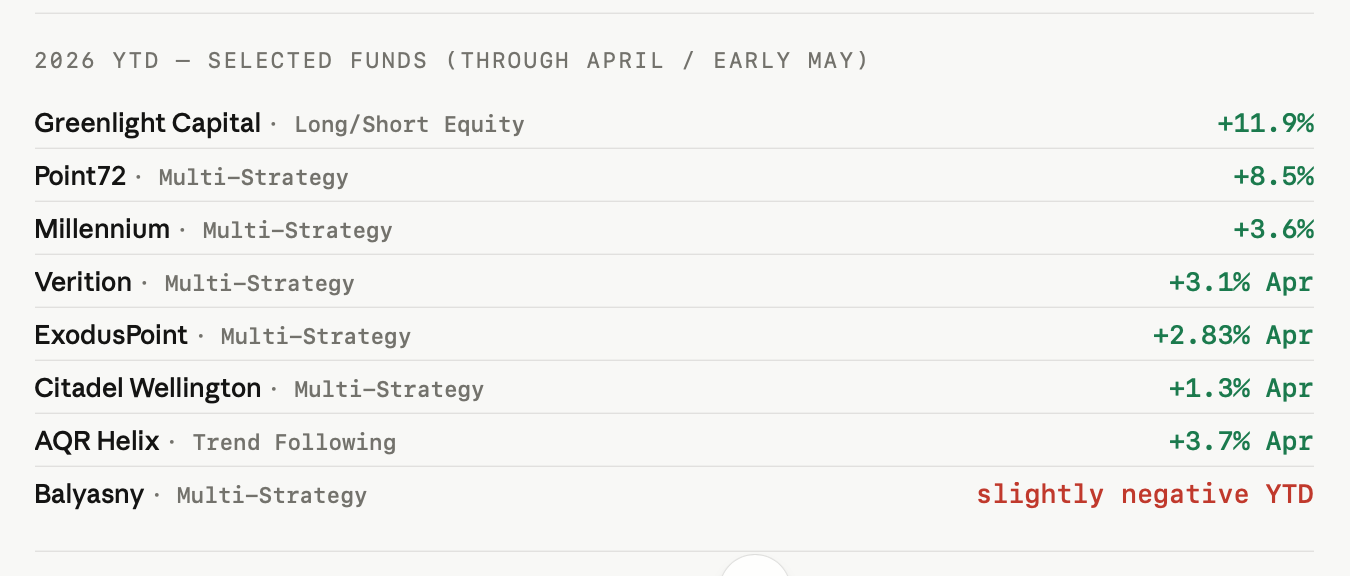
The most popular hedge fund long positions within tech returned 62% year-to-date. The average equity long/short fund is up 7% for the year, with technology the dominant contributor.
The split inside the tech sector tells the real story. Semiconductor exposure hit a record 10% weighting across hedge fund long books entering Q2 Goldman's highest reading ever for the category. Data centres, inference infrastructure, and optical networking names were accumulated with conviction through the quarter. Software exposure was simultaneously cut to 6% its lowest weighting since 2019. Seven years of dominance, quietly unwound in three months.
The logic is straightforward. Funds aren't betting on which AI application wins. They're betting that whoever wins will need the hardware to run it. Semiconductors don't care if OpenAI beats Anthropic or if Meta's Llama eventually takes the enterprise market. The chips get used either way. Software requires a specific winner at specific margins on a specific timeline and funds spent Q1 deciding that is not a bet they want to hold at current valuations.
"Hedge funds entered Q2 2026 with the most elevated long portfolio weight in semiconductors on record, at 10%. The 6% weight in software marks the low."
— Goldman Sachs Hedge Fund Trend Monitor, Q2 2026
Mega-cap tech still anchors the long books. Amazon holds the top spot on Goldman's VIP list for the tenth consecutive quarter. Meta, Alphabet, and Apple fill out the tier. But within that group the trades are diverging sharply. Funds bought Meta aggressively in Q1. They sold Microsoft. Same macro backdrop AI infrastructure enthusiasm producing opposite outcomes for two names that most retail portfolios treat as interchangeable.
Microsoft's problem isn't the technology. It's the positioning. When a stock becomes too crowded, even the right thesis becomes the wrong trade. Funds rotating out of Microsoft and into the picks-and-shovels layer are making a specific argument: that in a world where everyone already owns the obvious AI names, the returns have moved further down the stack.
Goldman's data on Russell 1000 stocks with the largest increase in hedge fund ownership during Q1 is where conviction shows up most clearly. Sandisk added 46 new hedge fund owners in a single quarter. Lam Research added 34. Applied Materials added 32. These are not headline names. They are the companies that manufacture and maintain the physical infrastructure of the AI economy and the money is accumulating them with urgency.
Revolution Medicines, a healthcare name, also added 32 new hedge fund owners a signal that the infrastructure thesis is extending into biotech, as AI-driven drug discovery begins attracting the same category of capital that chased hardware names a year ago.
Short interest in the median S&P 500 constituent has climbed to 3% of market cap the highest level since 2011. The concentration is not evenly spread. The majority of rising short positions sit in two sectors: software and financial services.
The same funds adding Lam Research to the long book are, in many cases, adding Asana or Dropbox to the short book.
This is not passive rotation. It is an active two-sided trade long the infrastructure, short the applications that were supposed to be built on top of it. Goldman data shows short sales outpacing purchases by roughly two-to-one in late January and early February, the most aggressive single-week shorting of individual stocks since 2016.
The infrastructure trade is working. The semiconductor longs are up. The software shorts are bleeding. Goldman is recording numbers it has never seen. But consensus positioning carries a well-documented risk: it works until it doesn't, and when it stops working, everyone reaches for the door simultaneously.
Semiconductor weightings at all-time records. Short interest at 15-year highs. The typical hedge fund holding 72% of its long book in its top 10 positions. These are not the metrics of a market with room to absorb surprises quietly. BNP Paribas projected $24 billion in net hedge fund inflows for 2026 before the spring volatility. The appetite remains. But it is now concentrated in a single trade, held by a very large number of very sophisticated investors, all watching the same exit.
The only question left is who ends up holding the infrastructure when the music stops.

From breaking news to thought-provoking opinion pieces, our newsletter keeps you informed & engaged.