After a volatile start to the year, the industry is finding its footing. Steve Cohen's platform is the standout. The old crowding debate is back — and this time allocators are listening.
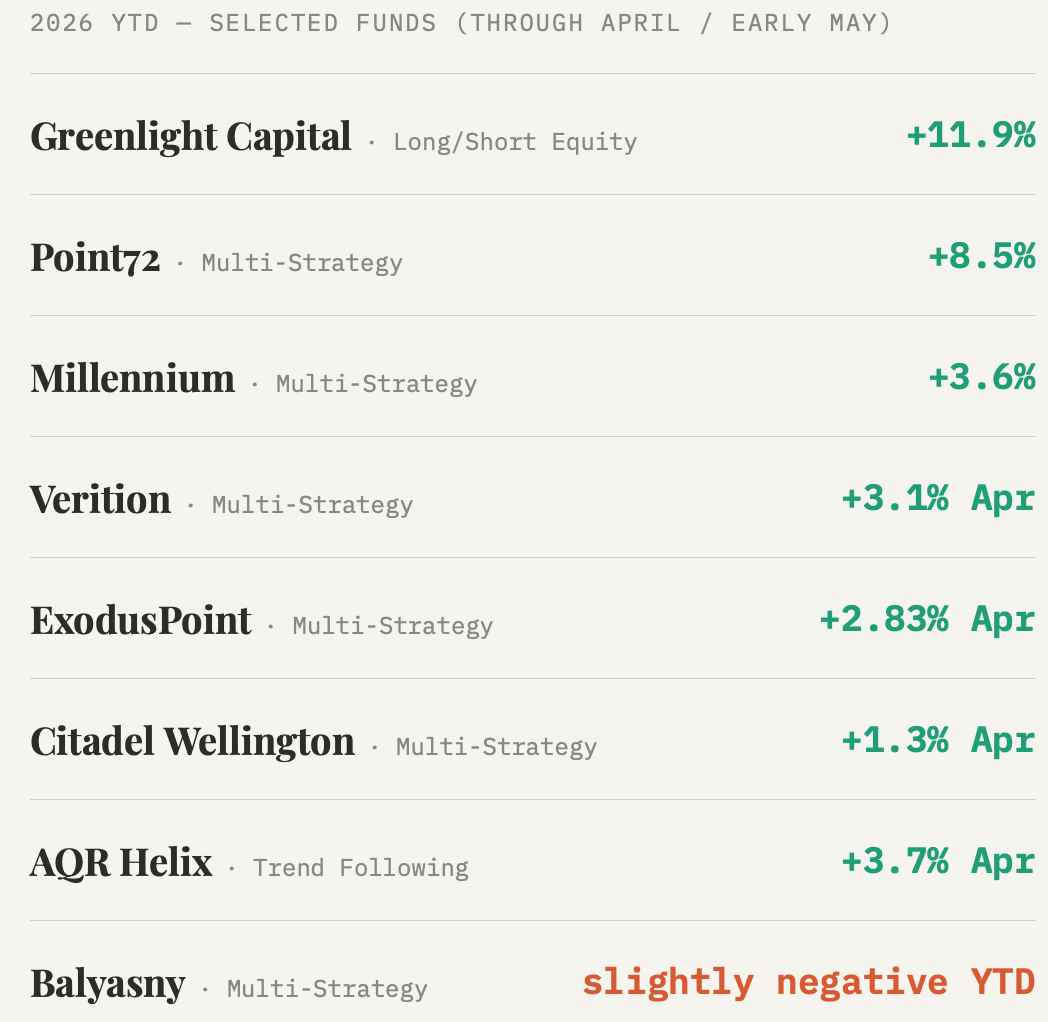
Steve Cohen's Point72 is up 8.5% year-to-date through early May. David Einhorn's Greenlight Capital has gained 11.9%. The S&P 500 ended April down 0.76%. Halfway through 2026, the hedge funds winning aren't always the ones you'd expect.
The industry entered this year carrying the best momentum in a decade back-to-back double-digit returns, nearly $5 trillion in assets, inflows at their highest in almost twenty years. Six months in, that momentum has held, but not evenly. The funds leading the 2026 table are a mix of old-school concentrated stock pickers, nimble macro traders, and at least one multi-strategy platform that navigated a volatile spring better than its peers.
The year's defining theme has been speed. In markets whipped by Trump tariff announcements, geopolitical shocks, and energy dislocations, the funds that could reposition quickly and reload into conviction have outperformed. The ones carrying the most crowded books got caught.
Point 72 Pulls ahead Cohen's platform gained 4.5% in April, a month the S&P finished in the red, pushing its year-to-date return to 8.5% through early May the strongest result among the major U.S. multi-strategy platforms. The firm's edge came from leaning into AI infrastructure exposure and emerging market dispersion, two trades that weren't widely owned precisely because they're harder to run at scale.
Verition gained 3.1% in April. Millennium stood at 3.6% year-to-date, gaining 2.7% in April alone. ExodusPoint rose 2.83% in April. Citadel's Wellington added 1.3% for the month. Schonfeld gained 1.1%. The platforms that wobbled earlier in the year found April kinder falling volatility freed up risk budgets, and those who repositioned quickly captured the rally.
Einhorn's quite come back Greenlight Capital's 11.9% year-to-date result is the kind of number that generates awkward conversations at allocator meetings. For years, the question has been whether concentrated, conviction-driven long/short equity the model Einhorn built his reputation on could survive in a world dominated by pod shops and systematic traders. Through May, the answer looks like yes.
Greenlight doesn't run correlated books with anyone. It doesn't have hundreds of portfolio teams executing similar factor tilts. When the pod shops face synchronized pressure, Einhorn's fund tends not to be in the same trades. In 2026, that structural independence has been the point.
"The market environment strongly favors active management — managers who can extract value from dispersion and dislocation."
— Evanston Capital Management, 2026 Hedge Fund Outlook
The concern has been circulating for years: as multi-strategy platforms hoovered up capital and talent, the similarity of strategies across pod teams and across firms quietly built a hidden concentration risk. In calm markets, everyone wins. In stressed ones, everyone unwinds at once, amplifying the moves that triggered the unwind.
The spring of 2026 gave that thesis a live test. The losses were contained, but their uniformity was striking. Allocators who had been adding to multi-strat exposure heading into the year are now asking harder questions — about leverage, about crowding, about what "uncorrelated" actually means when the platforms all have broadly similar factor exposures.
BNP Paribas, surveying 246 allocators representing $1.1 trillion in hedge fund assets between December and January, found 64% planned to increase hedge fund exposure in 2026 projecting $24 billion in net inflows. That survey predated the spring volatility. The appetite remains, but the allocation is being spread differently: more into tactical trading, quant equity, and discretionary macro. Less into the largest pod platforms.
The funds leading the 2026 table at halftime are doing so through differentiation — either running a genuinely different book, or running the multi-strat playbook better than peers. Point72's AI positioning. Greenlight's old-school stock picking. AQR's trend strategies catching the right dislocations. None of these are the same trade.
Industrywide, the backdrop remains supportive. Barclays' survey of 340+ allocators flagged rising demand for market-neutral equity, quant approaches, and discretionary macro as the preferred vehicles for 2026. Discretionary macro returned 11.5% on average through Q3 of last year and has continued drawing capital Milllennium veteran Gilberto Marcheggiano's Agave Capital, a macro debut, is among the most watched new launches of the year.
The second half of 2026 sets up with tariff policy still unpredictable, geopolitical risk elevated, and a Fed that has given the market no clean read on direction. For hedge funds, that's the environment they were built for. Whether this year's leaders can hold their edge or whether the pod shops reassert dominance is the trade allocators are now watching most closely.

From breaking news to thought-provoking opinion pieces, our newsletter keeps you informed & engaged.